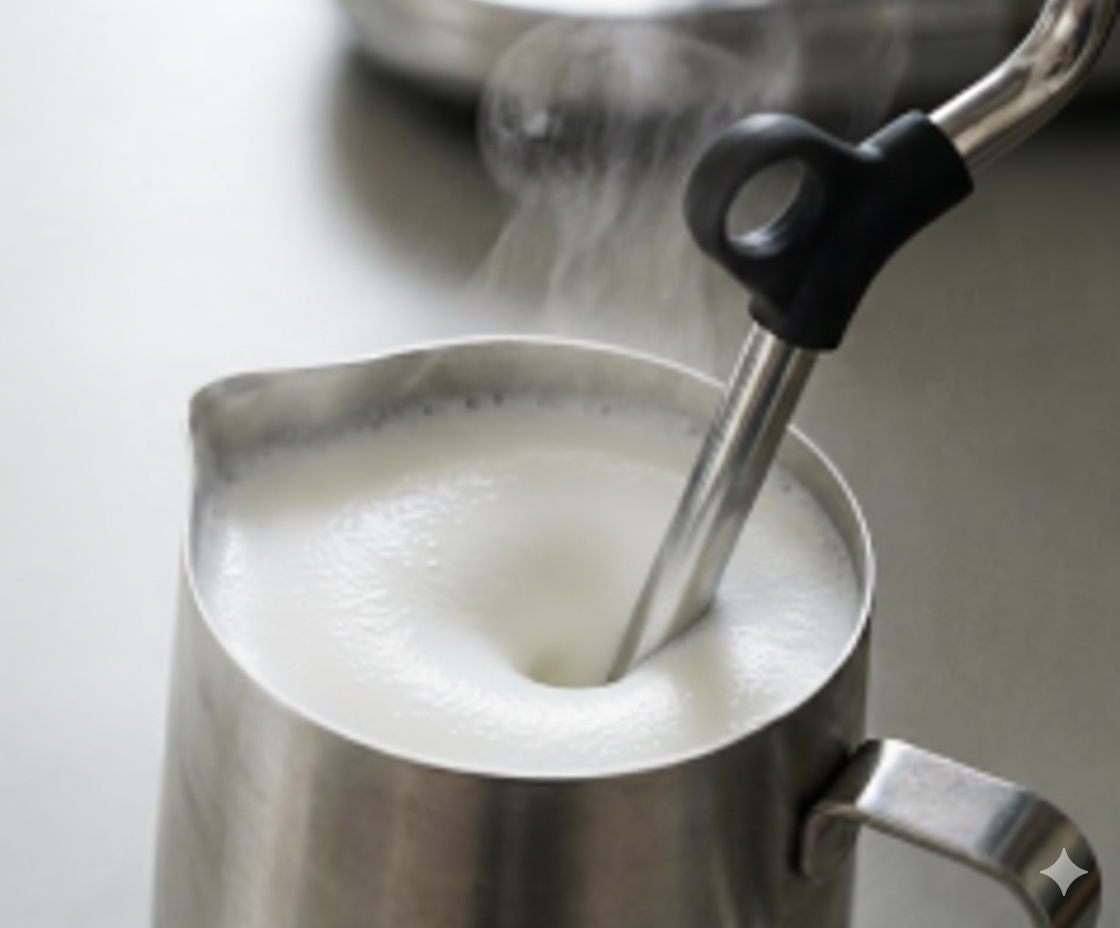
Alrighty, welcome back to another week on CraftedRoast!
I seriously cannot believe we're already in November. Where has this year gone?
Time flies by so quickly, and lately I've been thinking quite a bit about how different life feels compared to just a few years ago.
I've now been working at a startup as an engineer for more than a year. And I still remember how desperate I was to find a job after graduating. All those applications, the uncertainty, wondering whether someone would give me a chance.
And now? Here I am. Working as an engineer, learning something new almost every day, and surrounded by people who are incredibly smart.
It's actually quite humbling sometimes. There are so many things I still don't know, and working with people who have so much more experience constantly reminds me how much there is left to learn.
But that's also what makes engineering so interesting to me.
And somehow, in the middle of all of this, life just keeps moving faster.
Getting Older, Slowing Down, and Appreciating the Small Things
I don't know if anybody else feels this way, but I remember being somewhere between 7 and 15 years old, and time seemed almost infinite.
Seriously.
I would sit there watching the clock, waiting for the hours to pass, wishing I could finally be an adult.
My childhood wasn't always the most exciting, and I remember thinking that being grown up would be so much better.
Well, here I am now. I'm 27 years old, working as an engineer, and getting married next March to the most wonderful woman.
Something my younger self probably couldn't even have imagined.
And yet, there's this strange feeling that the older I get, the faster everything moves.
Sometimes I feel like I'm running through my days as if every single one were a 400-meter sprint. Work, responsibilities, projects, groceries, cleaning, sleeping, and then somehow it's Monday again.
And I occasionally wonder whether I'm so busy getting through the day that I forget to actually enjoy it.
Especially now, with fall arriving.
The trees here in Indiana are turning beautiful shades of red, orange, and yellow. There's one tree I particularly love: the ginkgo tree.
Originally native to China, the ginkgo has these beautiful fan-shaped leaves that turn an almost unbelievably bright yellow in autumn.
It's honestly one of my favorite things to see this time of year.
And I think those little moments are something we should appreciate more often.
Because life isn't just about the big milestones. Sometimes it's about noticing a beautiful tree on your way to work.
Or enjoying a really good cup of coffee before everybody else wakes up.
My Favorite Part of the Morning Is Still Coffee
Speaking of coffee, there's one purchase I absolutely don't regret.
My Breville Bambino Plus.
I've had this espresso machine for quite a while now, and it's still one of the best things I've bought.
Not necessarily because it makes the world's greatest espresso, although I've had some really good shots from it.
It's more about the experience.
Waking up early grinding my coffee beans, preparing the portafilter, and watching that first espresso come out.
There's something incredibly peaceful about it.
No meetings, no emails, no deadlines.
Just me and my coffee.
I honestly don't think that will ever change. Even on days when everything seems to move way too quickly, those few quiet minutes in the morning make such a difference.
And it's funny because something as simple as making coffee has also become one of the reasons I want to build something new.
Which brings me to today's actual topic.
My New Engineering Project: A Smart Milk Steaming Coach
Okay, now for the fun part!
I've had an idea floating around in my head for quite a while, and I finally decided to start turning it into a real engineering project.
I want to build a smart milk steaming coach.
And before you ask, no, I'm not trying to build another automatic milk frother that does everything for you.
I actually want to do something a little different.
I want to build a small electronic device that helps people learn how to steam milk properly.
Something that could potentially tell you whether you're introducing too much air, whether your technique needs adjusting, and when you should stop steaming.
Because there's one problem I still struggle with, even after making coffee for years.
Consistency.
Why Is Frothing Milk So Difficult to Get Right?
If you've ever tried making latte art at home, you probably know exactly what I'm talking about.
Some mornings I steam milk and everything turns out beautifully.
The texture is smooth, glossy, and almost like wet paint. I pour it into my espresso and manage to make a reasonably nice little heart.
Great!
And then the next morning?
Absolute disaster.
Sometimes I introduce way too much air and end up with a thick layer of foam sitting on top of the milk.
Other times I barely introduce any air at all, and the milk ends up too thin to pour decent latte art.
And occasionally, despite doing what feels like exactly the same thing as the day before, the result is completely different.
It's honestly a little frustrating.
Especially considering how much time I've already spent making coffee.
But I think that's also what makes milk steaming so interesting.
It looks incredibly simple when you watch an experienced barista do it. They position the steam wand, make a few adjustments, and suddenly they have this perfectly textured milk.
But behind that apparently simple process are quite a few variables.
You need to get the amount of air right, create the proper swirling motion, control the temperature, and know when to stop.
And most importantly, you need to recognize what good milk steaming actually sounds and feels like.
That last part is something that usually only comes with practice.
But what if we could make that learning process a little easier?
What If We Could Actually Measure Milk Steaming?
This is where my engineering brain started getting excited.
I'm an electrical engineer, and I spend a lot of my working time developing, testing, and validating electronic hardware.
I love figuring out how things work, finding problems, and building solutions.
And with how quickly artificial intelligence has been developing, writing software and experimenting with new algorithms has become easier than ever.
But hardware?
Hardware is still hard.
You actually need to design the electronics, select components, build prototypes, validate your measurements, and figure out why something that looked perfect on paper isn't working in real life.
And that's exactly the kind of challenge I enjoy.
So I started wondering:
Could we use sensors to understand what's happening while someone is steaming milk?
Not just measuring the temperature, but actually recognizing different parts of the milk steaming process.
My idea is to combine three different sensors.
1. A Microphone: Listening to the Milk
If you've ever learned how to steam milk, you've probably been told to listen for that gentle paper-tearing sound when introducing air.
Too much aggressive hissing can mean you're introducing air too quickly.
Once you've introduced enough air, you generally want the milk to keep circulating so that the bubbles become evenly distributed.
Those different phases produce different sounds.
So what if a microphone could help us recognize them?
My idea is to capture the audio while steaming milk and analyze its characteristics.
Potentially, we could use those audio patterns to estimate when air is being introduced and when the milk is simply circulating.
Of course, there will be challenges.
Different espresso machines, steam pressures, pitchers, and background noises will all affect the measurements.
But that's part of the fun!
2. An IMU: Measuring Pitcher Movement
The second sensor would be an IMU, which stands for Inertial Measurement Unit.
It's a little electronic component that can measure movement and rotation.
You can find similar sensors in smartphones, smartwatches, and all kinds of electronic devices.
My idea is to use it to measure how the milk pitcher moves during steaming.
For example, are you constantly moving the pitcher around? Are you maintaining a relatively stable position? Does the motion change when you transition between introducing air and circulating the milk?
I don't know yet how much useful information I'll be able to extract from those measurements.
But I think it will be interesting to find out.
3. A Temperature Sensor: Knowing When to Stop
The third part is probably the most straightforward.
Temperature.
One of the most common mistakes when steaming milk is overheating it.
For many milk-based espresso drinks, a useful starting target is somewhere around 55–65°C (131–149°F), depending on the milk and your preference.
I want to experiment with a temperature sensor that can help track the heating process.
This could potentially allow the device to provide feedback when the milk is approaching the desired temperature.
And when we combine temperature with sound and motion, things get really interesting.
Sensor Fusion: Combining Everything Together
In engineering, there's something called sensor fusion.
Basically, instead of relying on one sensor, you combine information from multiple sensors to get a better understanding of what's happening.
And that's what I want to experiment with.
Imagine you're steaming milk.
The microphone detects changes in sound that might indicate you're introducing air.
The IMU measures how the pitcher is moving.
And the temperature sensor tracks how quickly the milk is heating up.
By combining all three measurements, I hope to develop an algorithm that can recognize different phases of milk steaming and eventually provide useful feedback.
Maybe something like:
- You're still introducing air.
- It's time to focus on circulating the milk.
- You're approaching your target temperature.
- Your technique was more consistent than your previous attempt.
Now, to be clear, these are goals, not features I've already proven to work.
I still need to build the hardware, collect measurements, compare the sensor readings against actual milk texture, and figure out whether the information is reliable enough to be useful.
Just because a microphone can hear something doesn't mean it can automatically determine the quality of microfoam.
But that's exactly what I want to investigate.
Could This Help Beginner Baristas Learn Faster?
I started thinking about this project because of my own frustrations.
But I think there might be a much bigger application.
Imagine you're running a coffee shop and training somebody who has never steamed milk before.
You can explain the technique, demonstrate it, and let them practice.
But learning to recognize the correct sound, movement, and texture still takes time.
What if there were a small device that could provide additional feedback while they're learning?
Not something that replaces a good barista or an experienced trainer.
More like a little coach.
Something that helps beginners understand what they're doing differently from one attempt to the next.
And maybe, eventually, something that could help experienced home baristas improve their consistency too.
For now, it's simply an engineering side project that combines two things I'm passionate about: coffee and electronics.
And honestly, that's already a good enough reason for me to build it.
What's Next? Building the First Prototype
So where am I with this project?
I've started working on the electronics and thinking about how to package everything into a small device that could attach to a milk pitcher.
The first big challenges will be figuring out how to collect reliable sound, motion, and temperature measurements without making the device annoying to use.
After that, I want to start collecting data from actual steaming sessions.
Good milk, bad milk, too much foam, not enough foam.
Basically, all the mistakes I already make anyway, haha.
Then I'll be able to look at the measurements and see whether there are recognizable differences.
I'm especially curious about the microphone because I suspect that the sound of milk steaming might contain much more useful information than we realize.
But we'll see!
That's the exciting part about engineering. Sometimes an idea works beautifully, and sometimes you spend three days debugging something because of one tiny mistake.
Either way, you learn something.
And I want to share that process here on CraftedRoast.
Not just the successful results, but also the problems, the experiments, the PCB design, the prototypes, and hopefully some interesting data along the way.
A Little Reminder to Enjoy the Process
I guess it's funny how this whole blog post started with me thinking about how quickly time passes.
Because when I think about it, that's exactly why I love projects like this.
Life gets busy. Work gets stressful. Weeks disappear.
But taking the time to build something just because you're curious about it is genuinely enjoyable.
And the same goes for coffee.
Sometimes we get so focused on pulling the perfect espresso shot, achieving the perfect extraction, or pouring that beautiful latte art that we forget why we started making coffee in the first place.
Because it's fun.
Because it's relaxing.
And because those little moments in the morning can make an ordinary day feel a bit more special.
So here's to another November, another cup of coffee, and a new engineering project that will probably give me plenty of headaches along the way.
I'm excited to see where this goes.
And I'd love to hear from you!
If you make espresso at home, what's your biggest struggle when steaming milk?
Is it introducing too much air? Not enough foam? Getting the temperature right? Or just making your results consistent?
Let me know. I'm genuinely curious because your experiences might actually help me figure out what this little device should focus on.
Until next time, enjoy your coffee, appreciate the little things, and don't forget to look at those beautiful fall colors while they're still around.
Cheers,
Oliver
CraftedRoast — Exploring coffee, one experiment at a time.